Criminal Law

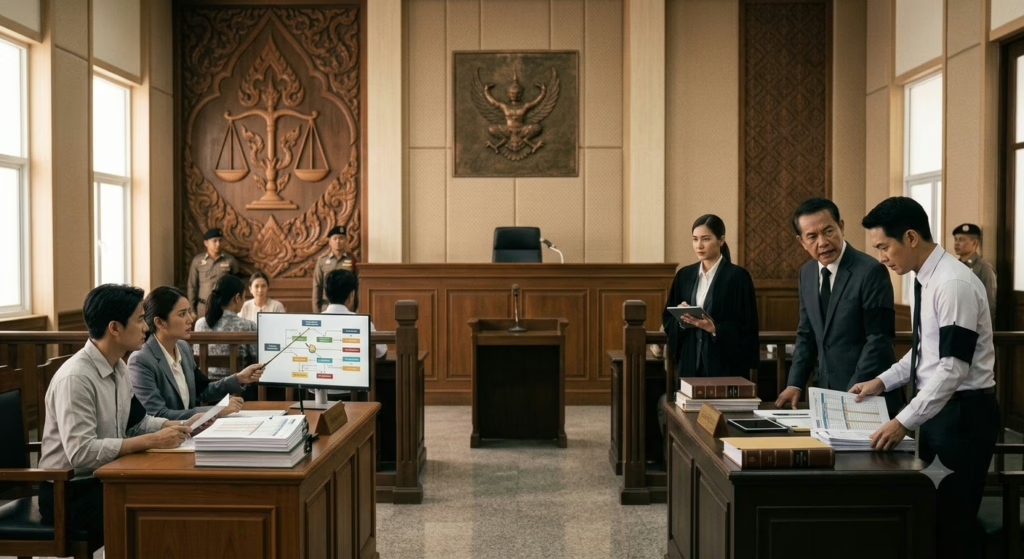
Multiple defense lawyers coordinating legal strategy in a complex criminal case courtroom setting

Multiple Defense Lawyers in One Case: Why Team Coordination Determines Case Outcomes

In complex criminal and civil litigation, having multiple defense lawyers can strengthen a case—or destroy it. This article explains why coordination among multiple defense lawyers is critical, how fragmented defense strategies lead to failure, and what professional legal teams must do to protect their clients’ interests.

Multiple Defense Lawyers in One Case: Why Team Coordination Determines Case Outcomes Read More »

Lawyer explaining legal risks of exposing a scammer on social media under defamation law

Can You Expose a Scammer on Social Media?

Being scammed often leads victims to expose the wrongdoer on social media. However, public accusations can trigger defamation liability—even when the allegations are true. This article explains when exposing a scammer may be lawful, the legal risks involved, and how to post more safely from a lawyer’s perspective.

Can You Expose a Scammer on Social Media? Read More »

Leading questions in cross-examination illustrated by a professional lawyer strategically questioning a witness in court

Leading Questions in Cross-Examination: The Strategic Art That Wins or Loses Courtroom Battles

Leading questions in cross-examination are one of the most powerful tools in litigation. This article explains how professional lawyers use leading questions to control witness testimony, expose inconsistencies, and strategically influence courtroom outcomes in both criminal and civil cases.

Leading Questions in Cross-Examination: The Strategic Art That Wins or Loses Courtroom Battles Read More »

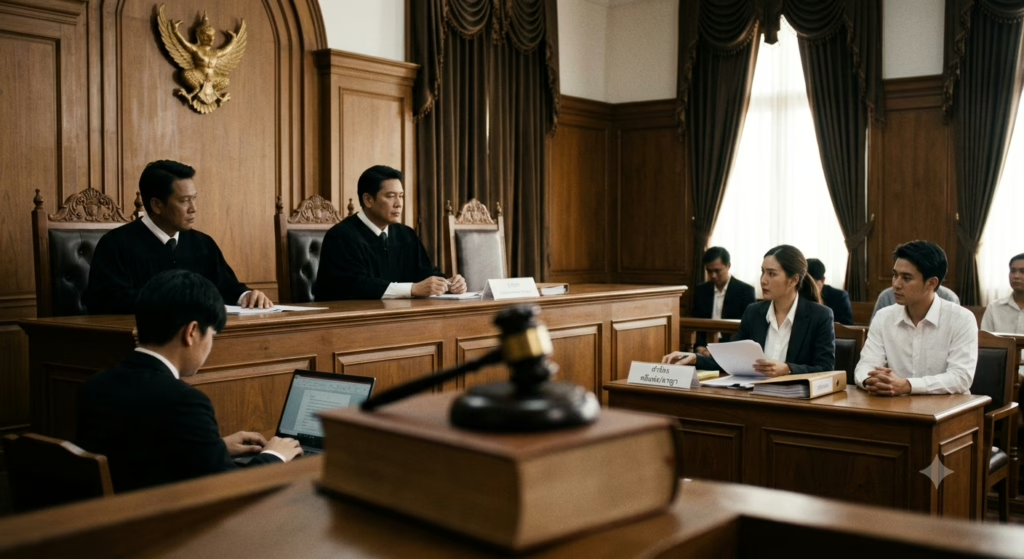
Professional criminal defense lawyer developing a strategic criminal defense plan before trial in court

Professional Criminal Defense Strategy: Why Criminal Cases Are Won or Lost Before Trial

A professional criminal defense strategy determines whether a case is won or lost long before trial begins. This article explains how experienced criminal defense lawyers structure facts, evidence, and legal theories to create reasonable doubt and control outcomes before stepping into court.

Professional Criminal Defense Strategy: Why Criminal Cases Are Won or Lost Before Trial Read More »

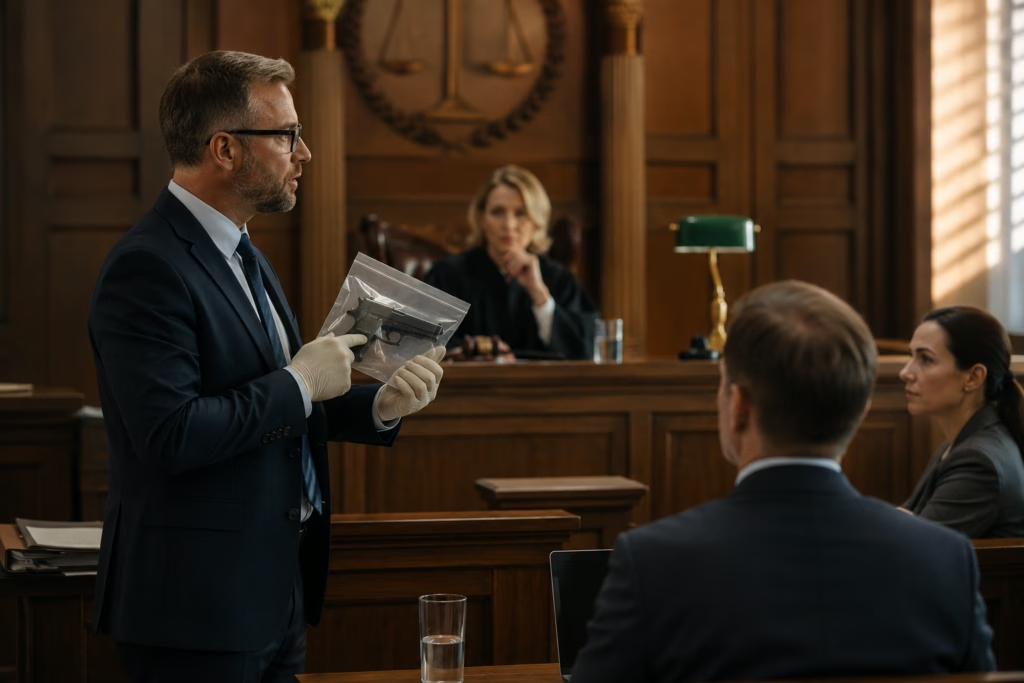
Diagram illustrating bullet trajectory analysis in warning shot vs attempted murder firearm cases under criminal law

Warning Shot vs Attempted Murder: How Courts Determine Criminal Intent in Firearm Cases

In firearm-related criminal cases, courts must determine whether a gun was fired as a warning shot or with intent to kill. This distinction—known legally as warning shot vs attempted murder—has profound consequences for criminal liability and sentencing. Courts rely on objective evidence, particularly bullet trajectory and the shooter’s conduct, to infer intent beyond verbal claims.

Warning Shot vs Attempted Murder: How Courts Determine Criminal Intent in Firearm Cases Read More »

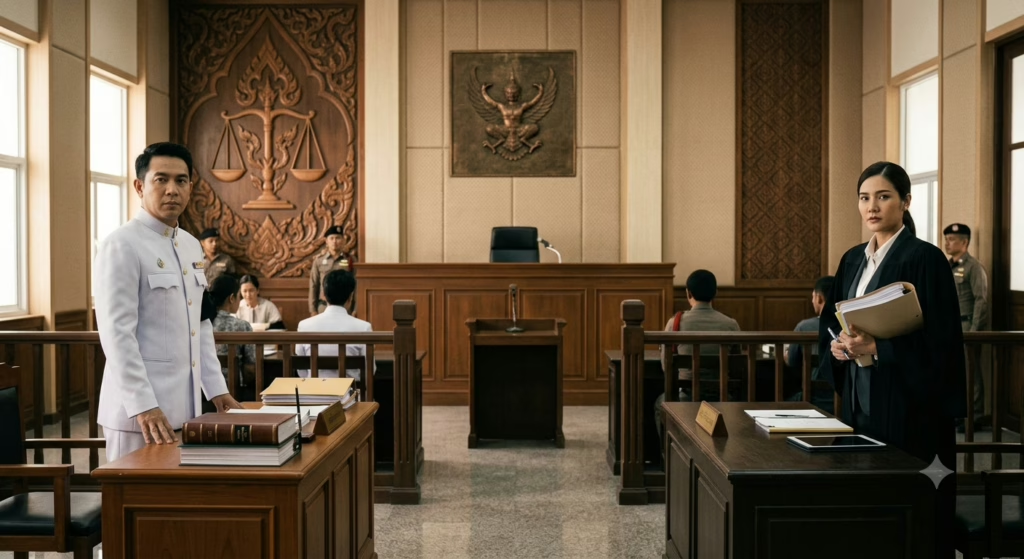
Bail proceedings in Thai criminal cases illustrating judicial risk assessment and court discretion in temporary release decisions

Bail in Thai Criminal Cases: Why the First Bail Application Is the Most Critical Stage of the Case

Bail in Thai criminal cases is not determined by money alone but by judicial risk assessment and legal credibility. This article explains why the first bail application is the most critical stage, how Thai courts evaluate risk, and how strategic legal preparation can significantly influence temporary release decisions.

Bail in Thai Criminal Cases: Why the First Bail Application Is the Most Critical Stage of the Case Read More »

Short questions in witness examination used by trial lawyers to control testimony during cross-examination in court

The Power of Short Questions in Witness Examination: A Strategic Tool for Effective Trial Advocacy

Short questions in witness examination are a fundamental trial advocacy technique that enables lawyers to control testimony, reduce evasion, and guide judicial fact-finding. This article explains the legal rationale, strategic advantages, and professional application of short, single-issue questions in direct and cross-examination.

The Power of Short Questions in Witness Examination: A Strategic Tool for Effective Trial Advocacy Read More »

Scroll to Top