civil case

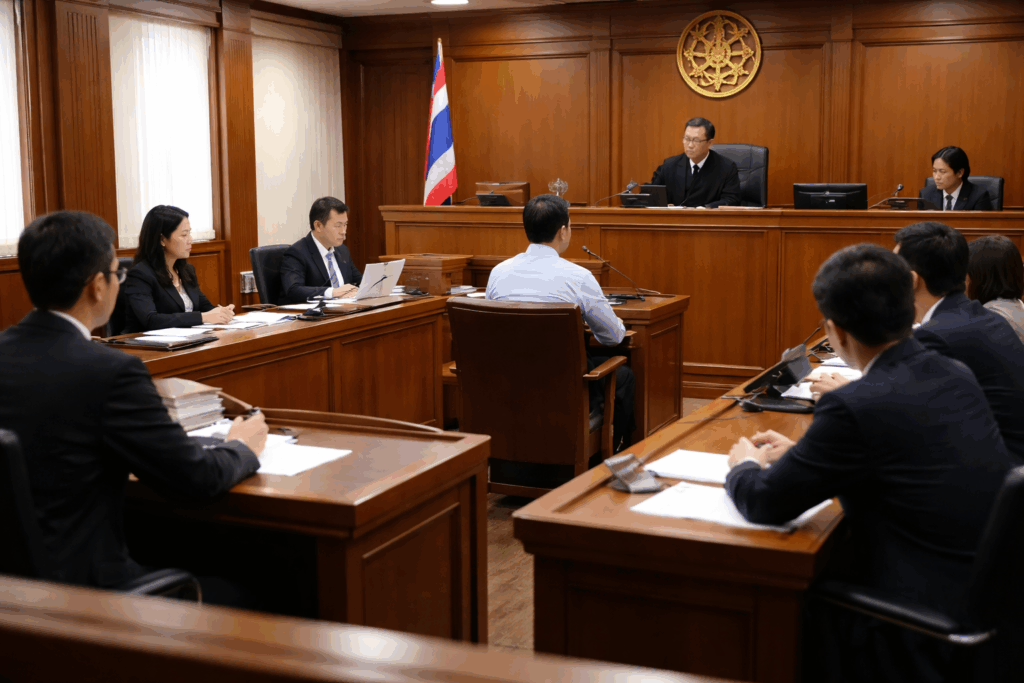
Amendment of pleadings under Thai Civil Procedure illustrating judicial discretion in civil litigation

Amendment of Pleadings under Thai Civil Procedure: Legal Principles, Limitations, and Judicial Discretion

The amendment of pleadings under Thai Civil Procedure allows parties in civil litigation to correct errors, clarify claims, and address newly discovered facts, subject to strict legal limitations and judicial discretion. This article explains the governing principles, statutory framework, timing requirements, and strategic considerations relevant to amending statements of claim and defence in Thailand.

Amendment of Pleadings under Thai Civil Procedure: Legal Principles, Limitations, and Judicial Discretion Read More »

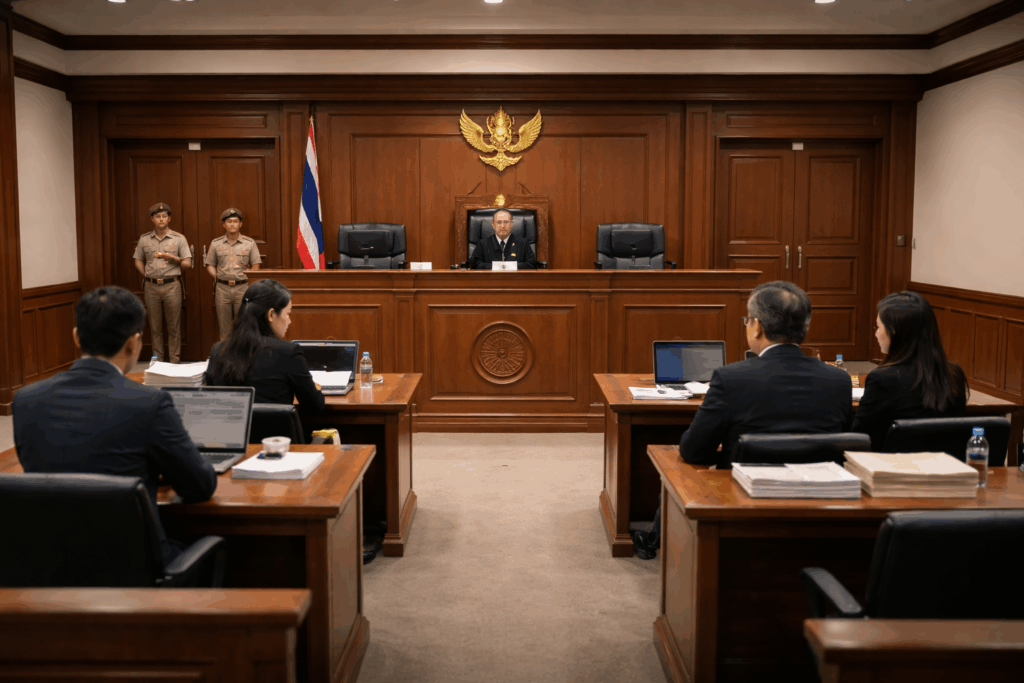
Early judicial determination of legal issues under Section 24 of the Thai Civil Procedure Code in Thai civil litigation proceedings

Early Judicial Determination of Legal Issues under Section 24 of the Thai Civil Procedure Code

Early judicial determination under Section 24 of the Thai Civil Procedure Code allows Thai courts to resolve civil disputes based solely on legal issues without proceeding to witness examination. This article provides an in-depth academic analysis of the legal principles, procedural requirements, judicial discretion, and strategic implications of invoking Section 24 in Thai civil litigation.

Early Judicial Determination of Legal Issues under Section 24 of the Thai Civil Procedure Code Read More »

Judicial assessment of accomplice witness testimony in Thai criminal law proceedings

Accomplice Witness Testimony under Thai Criminal Law: Principles, Credibility, and Judicial Assessment

Accomplice witness testimony plays a critical role in Thai criminal proceedings, particularly in cases involving multiple defendants. This article examines the legal principles governing its admissibility, credibility, and judicial assessment, explaining when Thai courts may rely on such testimony and why corroborating evidence is essential to ensure fairness and prevent wrongful convictions.

Accomplice Witness Testimony under Thai Criminal Law: Principles, Credibility, and Judicial Assessment Read More »

Hearsay evidence under Thai law illustrated through courtroom proceedings and judicial evaluation of witness testimony

Hearsay Evidence under Thai Law: Legal Principles, Exceptions, and Judicial Assessment

This article provides an in-depth legal analysis of hearsay evidence under Thai law, examining its definition, general inadmissibility, statutory exceptions based on necessity and reliability, and how Thai courts assess and weigh hearsay evidence in civil and criminal proceedings.

Hearsay Evidence under Thai Law: Legal Principles, Exceptions, and Judicial Assessment Read More »

Spousal maintenance and alimony claims in divorce cases under Thai law, illustrating legal obligations, court discretion, and financial consequences following marital dissolution in Thailand.

Spousal Maintenance (Alimony) in Divorce Cases Under Thai Law: Legal Principles, Conditions, and Judicial Discretion

Spousal maintenance (alimony) under Thai law is not automatic and depends on strict statutory conditions, procedural requirements, and judicial discretion. This article provides a comprehensive legal analysis of eligibility, court considerations, and termination of spousal maintenance in divorce cases in Thailand.

Spousal Maintenance (Alimony) in Divorce Cases Under Thai Law: Legal Principles, Conditions, and Judicial Discretion Read More »

Preliminary Examination in Criminal Cases in Thailand conducted by a criminal court judge before accepting a private criminal complaint

Preliminary Examination in Criminal Cases in Thailand: Legal Framework, Procedure, and Strategic Considerations

The Preliminary Examination in Criminal Cases in Thailand is a crucial judicial screening mechanism that determines whether a criminal complaint has sufficient factual and legal grounds to proceed to trial. This article explains the legal framework, procedural requirements, evidentiary standards, and strategic considerations relevant to complainants, defendants, and legal practitioners.

Preliminary Examination in Criminal Cases in Thailand: Legal Framework, Procedure, and Strategic Considerations Read More »

Keyword under Thai law – legal analysis by a lead law firm in Bangkok on revocation of property transactions between spouses

Revocation of Property Transactions Between Spouses Under Thai Law: Can Assets Transferred During Marriage Be Reclaimed?

Keyword is a powerful but often overlooked legal mechanism under Thai family law, allowing spouses to revoke property transactions made during marriage without the need to prove fault or misconduct. Governed by Section 1469 of the Thai Civil and Commercial Code, this provision reflects the legislature’s recognition of the unequal bargaining dynamics inherent in marital relationships.

This article, prepared by a Lead law firm in Bangkok, provides an in-depth academic and practical analysis of the legal principles, scope, limitations, and procedural considerations surrounding revocation of inter-spousal property transactions. It also examines the protection afforded to third parties acting in good faith and the enforceability of contractual waivers.

Designed for both legal practitioners and individuals with significant assets, this guide offers authoritative insight into one of the most consequential yet misunderstood areas of Thai marital property law.

Revocation of Property Transactions Between Spouses Under Thai Law: Can Assets Transferred During Marriage Be Reclaimed? Read More »

Thai family law attorney advising spouse on financial support rights in Bangkok

Spousal Support Without Divorce: Understanding Your Legal Rights in Thailand

Spousal support without divorce is legally possible in Thailand, ensuring that married couples can protect their financial rights even while remaining married. Under Thai law, both spouses have obligations to provide financial and daily support, including childcare, household management, and medical care. Filing for support without divorce may be necessary if one spouse refuses financial assistance, abandons the household, or neglects responsibilities. Thai courts evaluate income, financial capacity, and marital circumstances when determining the amount of support. Engaging a Lead law firm in Bangkok ensures proper filing, evidence preparation, and strategic advice to maximize your entitlement. Child support claims can also be addressed simultaneously, guaranteeing protection for the entire family. Understanding your rights and seeking timely legal guidance is crucial for anyone facing financial neglect in marriage. Learn more about asserting your rights with the help of experienced Thai family law attorneys.

Spousal Support Without Divorce: Understanding Your Legal Rights in Thailand Read More »

Scroll to Top