
Witness Examination in Court in Thailand: Legal Principles, Procedures, and Practical Implications
Introduction: Understanding Witness Examination in Court in Thailand
Witness examination in court in Thailand is one of the most critical stages of judicial proceedings under Thai procedural law. Whether in civil or criminal litigation, the process of examining witnesses determines how facts are presented, challenged, and ultimately assessed by the court. Thai courts rely heavily on witness testimony to establish factual truth, evaluate credibility, and render judgments in accordance with the law.
For litigants, defendants, and legal practitioners, understanding how witness examination operates is essential. A single statement made during witness examination can decisively affect the outcome of a case. This article provides a comprehensive legal analysis of witness examination in Thai courts, explaining its principles, procedures, and practical significance from a professional legal perspective.
Legal Foundation of Witness Examination in Thailand
The Role of Witness Evidence Under Thai Law
Under Thai law, judicial proceedings are fundamentally adversarial in nature. Both parties are entitled to present evidence, including witness testimony, to support their respective claims or defenses. Witness examination serves as the primary mechanism through which factual narratives are introduced into the court record.
In criminal cases, the prosecution bears the burden of proof beyond reasonable doubt, while in civil cases, the burden generally rests on the party asserting a claim. In both contexts, witness testimony often plays a decisive role in meeting or refuting that burden.
Governing Laws and Procedural Codes
Witness examination in Thailand is governed primarily by:
-
The Criminal Procedure Code
-
The Civil Procedure Code
-
Relevant Supreme Court precedents
-
Judicial regulations and courtroom practice
These legal frameworks establish rules regarding admissibility, credibility, examination order, and the rights and duties of witnesses.
Pre-Trial Requirements: Witness Lists and Evidence Disclosure
Submission of Witness Lists
Before witness examination can take place, each party must submit a witness list to the court within the timeframe prescribed by procedural law. This list must clearly identify:
-
The names and identities of witnesses
-
The nature of each witness’s testimony
-
Documentary or physical evidence to be introduced
This requirement reflects the principle of procedural fairness and ensures that no party is taken by surprise at trial.
Purpose of Advance Disclosure
Advance disclosure allows:
-
The opposing party to prepare cross-examination
-
The court to manage proceedings efficiently
-
The prevention of ambush litigation tactics
Failure to submit a proper witness list may result in exclusion of evidence or adverse procedural consequences.
Courtroom Structure and Participants During Witness Examination
Judicial Authority and Court Composition
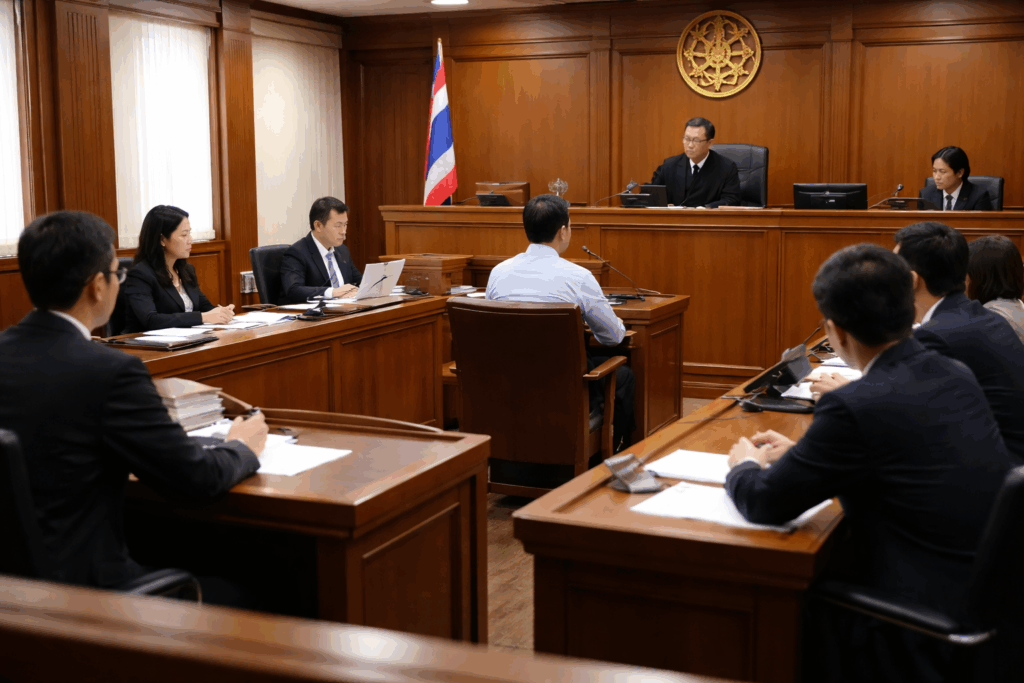
In Thai courts, the judge plays an active role in overseeing witness examination. Unlike purely adversarial systems, Thai judges may ask questions directly to clarify facts or address ambiguities in testimony.
Parties Present in the Courtroom
During witness examination, the courtroom typically includes:
-
The presiding judge or judicial panel
-
The plaintiff or public prosecutor
-
The defendant and defense counsel
-
The witness giving testimony
-
The court clerk recording proceedings
Each participant performs a legally defined function to ensure orderly adjudication.
The Process of Calling a Witness to Testify
Identity Verification and Preliminary Questions
When a witness is called, the court first verifies the witness’s identity through official identification. The judge will also inquire into:
-
The witness’s relationship with the parties
-
Whether the witness has any interest in the case
-
Which party has called the witness
This preliminary examination assists the court in assessing potential bias.
Oath or Affirmation
All witnesses must take an oath or affirmation to tell the truth. Providing false testimony constitutes perjury, which is a criminal offense under Thai law.
Stages of Witness Examination in Thai Courts
Direct Examination
Purpose and Legal Function
Direct examination is conducted by the party who calls the witness. Its primary objective is to allow the witness to present factual information that supports that party’s legal position.
Legal Constraints
Questions must generally be open-ended and non-leading, particularly in criminal cases. The court may intervene if questioning becomes improper or irrelevant.
Cross-Examination
Importance of Cross-Examination
Cross-examination is widely regarded as the most critical stage of witness examination. It allows the opposing party to challenge:
-
The accuracy of the witness’s perception
-
The reliability of the witness’s memory
-
Consistency with prior statements
-
Potential bias or motive
Effective cross-examination can significantly undermine the credibility of a witness.
Judicial Oversight
Thai judges closely monitor cross-examination to ensure that questioning remains relevant, respectful, and legally appropriate.
Re-Examination
Purpose of Re-Examination
Re-examination permits the calling party to clarify or correct issues raised during cross-examination. It is not an opportunity to introduce entirely new matters.
Strategic Considerations
Improper re-examination may weaken a witness’s credibility rather than restore it. Skilled legal advocacy is therefore essential.
Recording and Preservation of Testimony
Official Court Records
Witness testimony is officially recorded through:
-
Audio recording systems
-
Transcription by the court clerk
-
Judicial certification of accuracy
These records form part of the official case file and may be reviewed on appeal.
Use of Video Recording
In high-profile or complex cases, video recording may be employed to preserve testimony and enhance transparency.
Evaluation of Witness Credibility by Thai Courts
Factors Considered by Judges
When assessing witness testimony, Thai judges consider multiple factors, including:
-
Consistency of testimony
-
Demeanor and responsiveness
-
Corroboration with other evidence
-
Relationship with the parties
No single factor is determinative; credibility is assessed holistically.
Weight of Testimony
Not all witnesses are accorded equal evidentiary weight. Courts often distinguish between:
-
Fact witnesses
-
Expert witnesses
-
Interested or related witnesses
Judicial discretion plays a significant role in this evaluation.
Witness Examination in Criminal Proceedings
Prosecution Witnesses
In criminal cases, prosecution witnesses must establish the elements of the offense. Weak or inconsistent testimony may result in acquittal.
Defense Witnesses
Defense witnesses may present alibi evidence, rebut prosecution claims, or raise reasonable doubt. Their testimony can be decisive in close cases.
Witness Examination in Civil Litigation
Burden of Proof in Civil Cases
In civil proceedings, witness examination focuses on proving claims on a balance of probabilities. Documentary evidence is often supported or explained through witness testimony.
Commercial and Contractual Disputes
In commercial litigation, witness examination frequently addresses:
-
Contract formation and performance
-
Business practices
-
Financial transactions
Carefully prepared witness testimony is essential in such cases.
The Importance of Witness Preparation
Legal and Ethical Boundaries
While witnesses must not be coached to provide false testimony, lawful preparation includes:
-
Reviewing factual timelines
-
Explaining courtroom procedure
-
Clarifying legal relevance of testimony
Proper preparation enhances clarity and reduces confusion.
Risks of Inadequate Preparation
Unprepared witnesses may:
-
Provide inconsistent answers
-
Appear unreliable under cross-examination
-
Harm the overall credibility of the case
Common Mistakes During Witness Examination
Inconsistent Statements
Contradictions between testimony and prior statements can seriously damage credibility.
Emotional or Speculative Answers
Witnesses should answer only what they know personally. Speculation may be discredited.
Appeals and the Role of Witness Testimony
Use of Trial Records on Appeal
Appellate courts rely on trial records, including witness testimony, when reviewing judgments. Poorly recorded or unclear testimony may limit appellate arguments.
Limitations on Re-Examining Witnesses
Appeals are generally decided on the record, not through re-examination of witnesses, underscoring the importance of effective trial advocacy.
Practical Implications for Litigants and Defendants
Strategic Importance
Witness examination is not merely procedural; it is strategic. Success or failure often depends on:
-
Witness selection
-
Preparation
-
Examination technique
Role of Legal Counsel
Experienced legal counsel ensures that witness examination aligns with procedural rules and substantive legal strategy.
Conclusion: The Central Role of Witness Examination in Thai Court Proceedings
Witness examination in court in Thailand remains the cornerstone of judicial fact-finding. From pre-trial preparation to courtroom examination and judicial evaluation, every stage of the process carries legal significance. For individuals and organizations involved in litigation, understanding this process—and securing competent legal representation—is essential to safeguarding legal rights and achieving just outcomes.