

Warning Shot vs Attempted Murder: How Courts Determine Criminal Intent in Firearm Cases
In firearm-related criminal cases, courts must determine whether a gun was fired as a warning shot or with intent to kill. This distinction—known legally as warning shot vs attempted murder—has profound consequences for criminal liability and sentencing. Courts rely on objective evidence, particularly bullet trajectory and the shooter’s conduct, to infer intent beyond verbal claims.

Bail in Thai Criminal Cases: Why the First Bail Application Is the Most Critical Stage of the Case
Bail in Thai criminal cases is not determined by money alone but by judicial risk assessment and legal credibility. This article explains why the first bail application is the most critical stage, how Thai courts evaluate risk, and how strategic legal preparation can significantly influence temporary release decisions.

Why Criminal Cases Are Dismissed Despite Eyewitness Testimony
Many criminal cases are dismissed despite eyewitness testimony. This legal analysis explains how courts assess reliability, reasonable doubt, lighting conditions, and human perception when evaluating eyewitness evidence in criminal trials.

Why Hiring a Contract Drafting Lawyer Is Essential Instead of Using Contract Templates
Hiring a contract drafting lawyer is a critical step in protecting legal and commercial interests. This article explains why professionally drafted contracts offer greater clarity, enforceability, and risk management than generic contract templates, particularly for complex or high-value transactions.

The Power of Short Questions in Witness Examination: A Strategic Tool for Effective Trial Advocacy
Short questions in witness examination are a fundamental trial advocacy technique that enables lawyers to control testimony, reduce evasion, and guide judicial fact-finding. This article explains the legal rationale, strategic advantages, and professional application of short, single-issue questions in direct and cross-examination.

Bounced Check in Thailand: When a Dishonored Cheque Does Not Constitute a Criminal Offense
A bounced check in Thailand is not always a criminal offense. This article explains when criminal liability arises under the Cheque Act and key legal defenses.

Divorce in Thailand: Legal Grounds, Court Procedures, and Practical Considerations Under Thai Law
Divorce in Thailand is governed by strict legal requirements under the Thai Civil and Commercial Code. This article provides an in-depth legal analysis of divorce grounds, court procedures, mediation, child custody, property division, and spousal maintenance, offering practical guidance for Thai and foreign spouses navigating family law disputes in Thailand.

Adultery Claim in Thailand: Legal Framework, Litigation Strategy, and Damage Assessment Under Thai Law
An adultery claim in Thailand is a civil action for damages, not a criminal offense. This article explains the legal framework, evidentiary requirements, litigation strategy, and how Thai courts assess compensation under the Civil and Commercial Code.
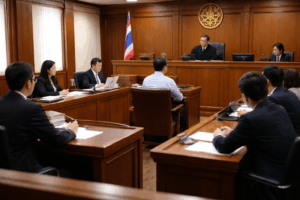
Witness Examination in Court in Thailand: Legal Principles, Procedures, and Practical Implications
Witness examination in court in Thailand is a decisive stage of judicial proceedings where testimony is presented, challenged, and evaluated by the court. This article provides an in-depth legal analysis of procedures, principles, and strategic considerations governing witness examination under Thai law.

Cross-Examination of Witness Credibility: Legal Principles and Practical Strategies in Criminal Litigation
Cross-examination of witness credibility is a critical element of criminal litigation. This article examines legal principles and courtroom strategies used by defense lawyers to challenge perception, memory, and impartiality of witnesses in criminal trials.

Missing Person Declaration in Thailand: Legal Procedures, Consequences, and Practical Implications
A Missing Person Declaration in Thailand is a court procedure that allows a person to be legally presumed deceased after prolonged disappearance. This article explains the legal requirements, court process, inheritance consequences, and revocation under Thai law in a clear and professional legal framework.

Police Summons in Thailand: Legal Meaning, Procedure, and Risks of Detention
Receiving a Police Summons in Thailand does not automatically mean arrest or detention. This article explains the legal meaning of a police summons, the investigation process, risks of pretrial detention, and how individuals—both Thai and foreign—should properly prepare under Thai criminal procedure law.