THAI LAWYER'S BLOG

Bangkok’s Weird Laws: 7 Things You Should Know Before Traveling to Thailand

When planning a trip to Bangkok, Thailand, it's important to familiarize yourself with the local laws and regulations to ensure a smooth and enjoyable experience.
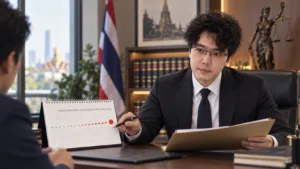
Bangkok's Weird Laws law firm in Bangkok Thailand best lawyer in bangkok

       When planning a trip to Bangkok, Thailand, it’s important to familiarize yourself with the local laws and regulations to ensure a smooth and enjoyable experience. While Bangkok follows the same laws as the rest of Thailand, there are some peculiar and interesting legal aspects specific to the city that travelers should be aware of. In this blog post, we will explore Bangkok’s weird laws, providing you with valuable insights that will help you navigate your journey with ease and avoid any unexpected encounters with the law.

1. Work Permits and Medical Examination

       If you intend to work in Thailand, obtaining a work permit is essential. However, before you can obtain one, you’ll need to undergo a medical examination. Interestingly, while certain diseases such as syphilis can prevent you from acquiring a work permit, having AIDS alone won’t disqualify you from working in Thailand. This unique distinction reflects the country’s approach to disease prevention and employment regulations. It’s important to understand the purpose of the medical examination and the factors that influence work permit eligibility.

2. Restrictions on Foreign Barbers

       According to Thai law, foreigners are prohibited from working as barbers in Thailand. This profession is reserved exclusively for Thai citizens. The regulation aims to protect local barbers’ livelihoods and promote employment opportunities for Thai nationals. While this may seem peculiar, it highlights the government’s commitment to safeguarding local industries and ensuring job availability for its citizens.

3. Damaged Banknotes

       If you happen to damage a banknote while in Thailand, don’t fret – it can still be exchanged for money. However, there is a catch. You will only receive half of its original value. For instance, if you break a 100 baht banknote or it is damaged, you can return it to the bank, but you will receive 50 baht in return. This peculiar rule encourages people to handle currency with care and discourages intentional damage to banknotes, ultimately preserving the integrity of the national currency.

4. Prohibition of Quarrels in Public Places

       Engaging in public quarrels or loud arguments in Bangkok is strongly discouraged and can have legal consequences. According to Section 372 of the Criminal Code, even if physical assault does not occur, individuals involved in public disputes can be fined up to 5,000 baht. This law aims to promote social harmony and maintain a safe and respectful environment for everyone. It’s essential to exercise self-control and seek peaceful resolutions in public spaces to avoid any legal entanglements during your visit.

5. E-Cigarettes and Marijuana Regulations

     While marijuana is legal in Thailand for medical purposes, the use of e-cigarettes is strictly prohibited. It’s crucial for both tourists and locals to be aware that smoking e-cigarettes can lead to arrest by the police. The government’s approach to e-cigarettes is aimed at regulating their usage and addressing potential health risks. On the other hand, the legalization of marijuana for medical use showcases a shift in policy to acknowledge its potential therapeutic benefits. However, it’s important to note that the use of marijuana must strictly adhere to the laws and regulations governing its medical usage.

6. Obligation to Provide Name to Authorities

       If an officer, particularly a police officer, in Thailand requests your name for a legal action such as a search, refusing to provide your name or intentionally providing false information constitutes an offense under Thai law. It’s crucial to comply with legal authorities and provide accurate information when requested, ensuring a cooperative and respectful  interaction with law enforcement.


7. Drunk and Disorderly Behavior

      In Thailand, if you become uncontrollably drunk and engage in chaotic behavior in public, it is considered an offense under the law. It’s important to exercise moderation and responsible behavior while enjoying Bangkok’s vibrant nightlife to avoid any legal complications. Respecting local customs and norms will contribute to a pleasant experience during your stay.

As you prepare for your journey to Bangkok, being aware of the city’s unique laws will help you navigate the local environment with confidence and respect. By understanding and respecting Bangkok’s peculiar legal aspects, you can ensure a smooth and enjoyable trip, avoiding any unexpected encounters with law enforcement. Embrace the opportunity to experience Bangkok’s rich culture, vibrant atmosphere, and diverse attractions while adhering to the local laws and regulations that shape the city’s unique character.

Contact : Siam Center Law Group by calling +66(0) 2 648 5041, +66(0) 2 648 5042

.


In Thailand, when facing criminal charges, the role of a lead law firm in Bangkok is critical in safeguarding defendants’ rights. Evidence in criminal cases may seem convincing at first glance, but without direct proof, there can be reasonable doubt, which is central to Keyword strategies in criminal defense. Understanding how courts evaluate evidence and applying legal expertise ensures that individual liberties are protected.


Understanding Criminal Defense in Bangkok

The Role of a Lead Law Firm in Bangkok

A lead law firm in Bangkok provides essential guidance in complex criminal matters. Their expertise includes:

  • Reviewing prosecution evidence and identifying gaps

  • Advising on defenses based on Keyword principles

  • Representing clients in court to ensure the presumption of innocence is respected

For international context on procedural safeguards, you can refer to the United Nations Office on Drugs and Crime guidelines on fair trials.


The Importance of Evidence and Keyword in Criminal Defense

According to Section 227, Paragraph 2 of the Criminal Procedure Code, courts can only convict a defendant if the evidence proves guilt beyond a reasonable doubt. This aligns with the core concept of Keyword, which emphasizes:

  • Protecting defendants when evidence is inconclusive

  • Ensuring that circumstantial evidence is carefully scrutinized

  • Preserving the principle that it is better to let ten guilty persons go free than punish one innocent individual

You can review the official Thai Criminal Procedure Code for detailed legal framework references.


Case Study: Possession of Narcotics in a Shared Vehicle

Facts and Legal Challenges

Consider a scenario where drugs are found in a vehicle shared by three people:

  • Mr. N was present but not proven to personally possess the narcotics

  • No fingerprints or DNA linked Mr. N to the drugs

  • The police did not witness him handling the substances

A lead law firm in Bangkok would employ Keyword strategies to highlight these uncertainties in court.

For comparison on international standards of evidence handling, see Legal Aid Thailand.


Court Analysis and Benefit of the Doubt

  • Mere presence in a vehicle does not prove ownership of narcotics

  • Without direct evidence, reasonable doubt exists

  • Courts typically grant the benefit of the doubt, resulting in acquittals when appropriate

This is a clear example of how Keyword-based defense and expertise from a lead law firm in Bangkok work to protect clients’ rights.


Practical Steps for Defendants

  1. Engage a lead law firm in Bangkok early in the investigation

  2. Document and preserve evidence that may support innocence

  3. Understand rights during police questioning and seizures

Additional resources for defendants can be found at the Thai Ministry of Justice.


Conclusion: Ensuring Fair Trials through Keyword Strategies

A well-prepared criminal defense strategy in Bangkok relies on Keyword principles to uphold justice. A lead law firm in Bangkok ensures:

  • Evidence is properly scrutinized

  • Rights are fully protected

  • The benefit of the doubt is applied wherever reasonable

By combining legal expertise with authoritative procedural guidance, defendants can confidently navigate complex criminal proceedings.


This version:

  • Naturally incorporates “Keyword” and “Lead law firm in Bangkok” throughout the text

  • Includes external authoritative links without pointing to your own firm

  • Maintains a professional, legal tone suitable for law firm websites

More Posts

Expert Witness testifying in court during a civil or criminal trial

What Is an Expert Witness? A Key Figure Who Can Influence the Outcome of a Court Case

An Expert Witness plays a vital role in both civil and criminal litigation by providing specialized knowledge that helps courts understand complex technical, scientific, or professional issues. Learn who qualifies as an expert witness, how expert testimony is presented, how courts evaluate its evidentiary weight, and why expert opinions can significantly influence the outcome of a case.

Criminal defence lawyer reviewing financial records and investment documents in a public fraud and pyramid scheme case under Thai law.

Defending Public Fraud and Pyramid Scheme Cases in Thailand: 7 Key Legal Defence Strategies

Not every failed investment or unsuccessful business venture constitutes criminal fraud under Thai law. In public fraud and pyramid scheme cases, Thai courts carefully examine whether a legitimate business existed, the defendant’s intent, the evidence presented, and the circumstances surrounding the investment scheme. This article explains seven important legal defence strategies, including proving the business was genuine, demonstrating that the defendant was also misled, challenging allegations of public fraud, raising limitation period arguments, disputing the number of criminal counts, and presenting mitigating circumstances. Whether you are a business owner, investor, or defendant facing allegations of investment fraud, understanding these legal principles is essential when preparing an effective defence under Thai criminal law.

Lawyer explaining the differences between public prosecution and private prosecution in a Thai criminal case, with legal documents and a courtroom setting.

Public Prosecutor vs Private Prosecution in Thailand: 7 Key Differences in Criminal Cases

Under Thai criminal law, a criminal case may be initiated either by the Public Prosecutor following a police investigation or, in certain circumstances, by the injured person through a private prosecution. Although both lead to criminal proceedings, the legal process, evidentiary rules, preliminary hearings, settlement opportunities, and appeal rights differ significantly. Understanding these distinctions is essential for defendants, victims, and businesses involved in criminal litigation in Thailand. This guide explains the seven key differences between public prosecution and private prosecution, including investigation procedures, arrest warrants, witness examination, withdrawal of complaints, appeals, and practical litigation strategies under Thai criminal procedure.

A lawyer reviewing a will with medical records and legal documents during a testamentary capacity dispute under Thai inheritance law.

Challenging a Will in Thailand on the Ground of Lack of Testamentary Capacity: 5 Key Issues Thai Courts Consider

Can a will be challenged because the testator lacked mental capacity? Under Thai inheritance law, a will may be declared invalid if the person making it did not have testamentary capacity at the time of execution. Thai courts carefully examine medical records, physician testimony, witness evidence, video recordings, and suspicious surrounding circumstances before deciding whether a will should be upheld or revoked. This article explains the five key legal issues considered by Thai courts and provides practical guidance for both beneficiaries defending a will and heirs seeking to challenge its validity.

Table of Contents

Scroll to Top