
What Is Pretrial Detention in Thailand? A Legal Guide to Custodial Remand During Criminal Investigations
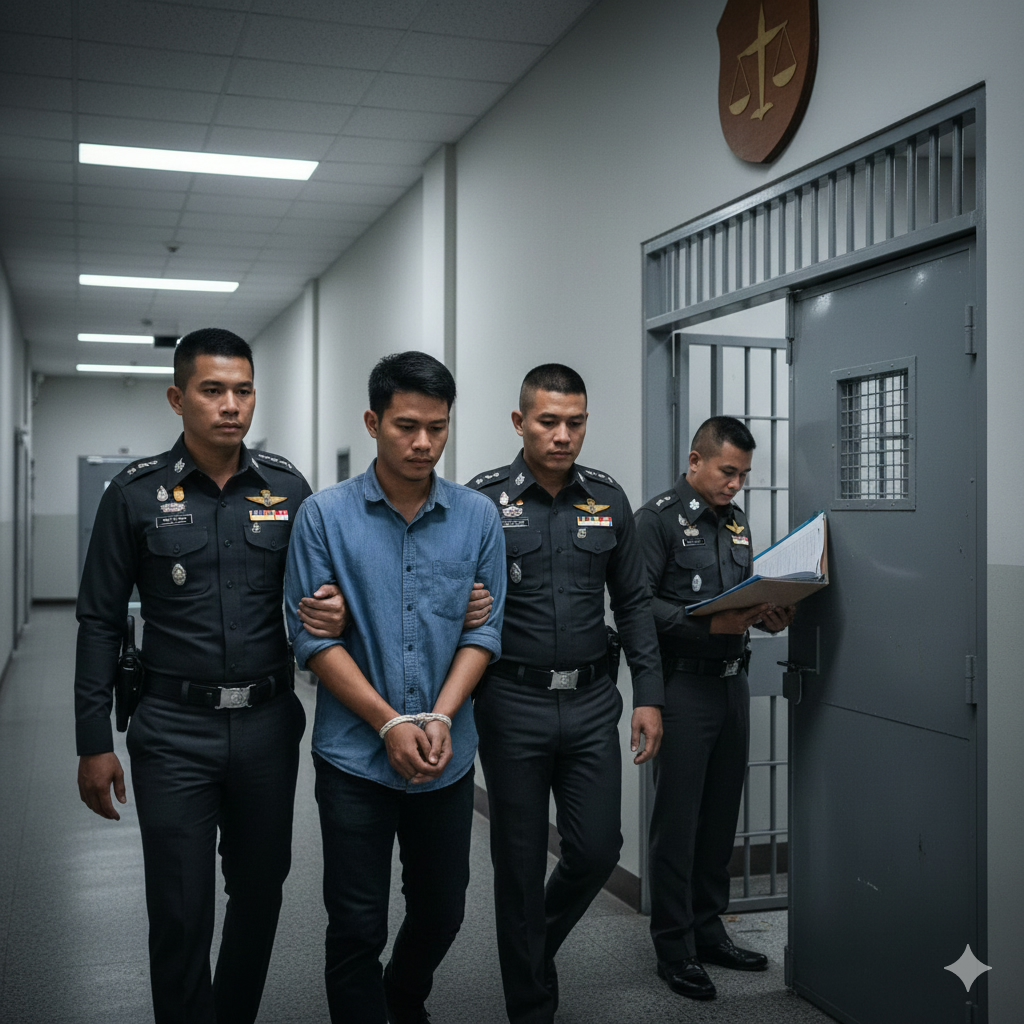
Pretrial detention—commonly referred to in Thailand as “custodial remand” or “detention pending investigation”—is a critical stage in criminal proceedings that directly affects a suspect’s liberty. Many individuals and families face this process without fully understanding their legal rights. This article explains what pretrial detention is, why authorities request it, how long a suspect can be detained, and what legal rights a suspect has under Thai criminal law.
Definition of Pretrial Detention Under Thai Law
Pretrial detention is a legal procedure in which an investigating officer petitions the court for permission to temporarily detain a suspect while the criminal investigation is still ongoing. It is important to emphasize that pretrial detention is not a punishment and does not imply guilt.
Under Thai law, a suspect is presumed innocent until a final judgment is rendered by the court. Therefore, law enforcement officers are not permitted to detain a suspect beyond the statutory time limit unless the court grants permission through a formal detention order.
Why Investigators Request Pretrial Detention
Investigating officers may request pretrial detention when they believe detention is necessary to protect the integrity of the investigation. Common reasons include concerns that the suspect may flee, interfere with witnesses or evidence, commit further offenses, or where the case involves serious charges carrying severe penalties.
However, these reasons are not automatically accepted. The court independently evaluates whether detention is truly necessary, balancing the interests of justice against the suspect’s fundamental right to liberty.
Who Can Be Subject to Pretrial Detention
Any individual formally accused as a suspect in a criminal case may be subject to pretrial detention. This includes suspects arrested under an arrest warrant, those apprehended in the act of committing an offense, or individuals who voluntarily appear to acknowledge charges following a summons.
Voluntary cooperation with authorities does not, by itself, guarantee that pretrial detention will not be sought.
The Pretrial Detention Procedure in Practice
Once a suspect is arrested or taken into custody, investigators must inform the suspect of the charges and their legal rights. The suspect may be held in police custody for up to 48 hours. If the investigation cannot be completed within this period and continued detention is deemed necessary, the suspect must be brought before the court for a pretrial detention hearing.
The court will review the detention request, supporting reasons, and the circumstances of the case. If the suspect is held beyond 48 hours without a court order, such detention is considered unlawful under Thai law.
Duration of Pretrial Detention
Pretrial detention is granted in fixed periods, each not exceeding 12 days. Investigators may apply for multiple detention periods, but the total duration must remain within the statutory maximum prescribed by law, which varies depending on the seriousness of the offense.
Once the maximum allowable detention period expires and the public prosecutor has not yet filed charges, the court is legally required to order the suspect’s immediate release.
Legal Rights of Suspects During Pretrial Detention
Suspects have several critical rights during the pretrial detention process. First, they have the right to oppose the detention request. The suspect and their legal counsel may present arguments to the court demonstrating that detention is unnecessary, such as the absence of flight risk, lack of interference with evidence, or willingness to cooperate fully with the investigation.
Second, suspects have the right to apply for temporary release (bail) at every stage of the pretrial detention process. This right is not limited to a single application. Legal representation at this stage can significantly influence the outcome of detention and bail proceedings.
Does Release After Maximum Detention Mean the Case Is Over?
Release due to the expiration of the maximum detention period does not terminate the criminal case. It merely ends the suspect’s detention during the investigative phase. If the public prosecutor later decides to file charges, the suspect may still be summoned or arrested to stand trial in accordance with legal procedures.
Conclusion: Pretrial Detention Is a Legal Measure—Not a Conviction
Pretrial detention is a temporary legal mechanism designed to facilitate criminal investigations, not to punish suspects. Every detention request must be approved by the court, and suspects retain the right to oppose detention and seek bail at all times. Understanding these rights—and obtaining legal advice early—can be crucial in protecting personal liberty and shaping the course of a criminal case.