
Requesting the Replacement of a Judge under Thai Law: Grounds for Challenging a Judge, Procedures, and Legal Rights of Parties
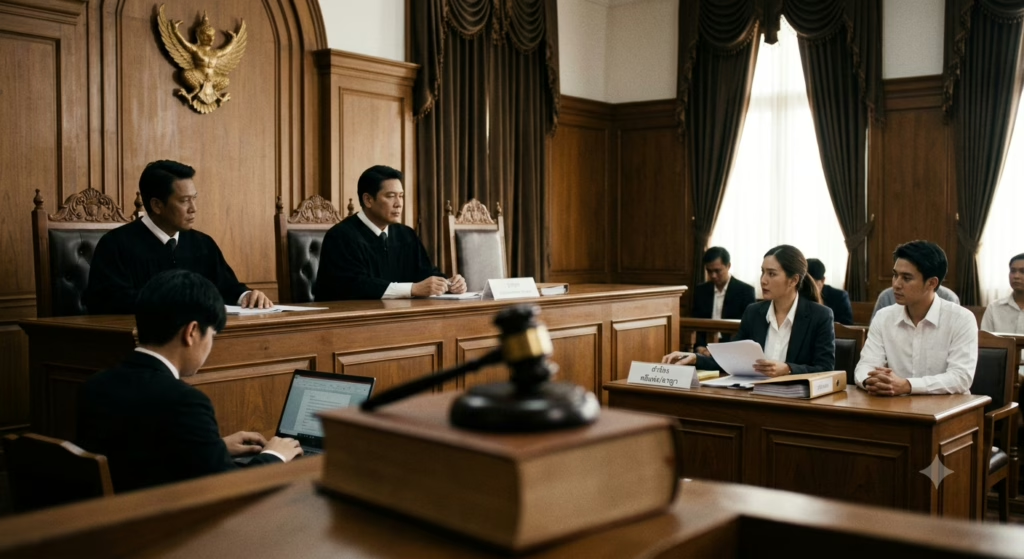
When a party to a legal proceeding believes that a judge may not be impartial or may have circumstances that affect the fairness of the trial, Thai law provides a mechanism to challenge the judge and request a replacement.
However, this right cannot be exercised merely because a party disagrees with the court’s decisions, orders, or the way the proceedings are conducted. A request to replace a judge must be supported by legally recognized grounds and clear factual circumstances indicating a possible lack of impartiality.
This article explains what a judge challenge or request for disqualification of a judge means under Thai law, the grounds for making such a request, the procedures involved, and important considerations before exercising this legal right.
What Is a Request to Replace a Judge under Thai Law?
A request to replace a judge is a legal safeguard designed to protect the rights of litigants and maintain public confidence in the justice system.
The purpose of this mechanism is to ensure that cases are heard by a judge who is independent, neutral, and free from circumstances that may create doubts about impartiality.
Thai law uses different terminology depending on the type of case:
- In civil cases, the process is generally referred to as challenging or objecting to a judge.
- In criminal cases, it is referred to as raising a challenge or objection against a judge’s participation in the case.
Although the terminology differs, the underlying principle is the same: every party has the right to a fair trial before an impartial court.
Grounds for Challenging a Judge
A party cannot challenge a judge simply because they disagree with the judge’s opinions or decisions. The challenge must be based on circumstances that may reasonably affect the judge’s neutrality.
1. The Judge Has a Personal Interest in the Case
A judge may be challenged if there are circumstances suggesting that the judge has a personal interest connected to the dispute.
Examples include:
- The judge has a financial interest related to the case;
- The judge is a creditor or debtor of one of the parties;
- The judge has a business relationship with a party involved in the proceedings.
If these circumstances may affect public confidence in the judge’s impartiality, the party may have grounds to submit a request for disqualification.
2. The Judge Has a Personal Relationship with a Party
A judge may also be challenged where there is a close personal connection with a party, such as:
- Being a family member or relative;
- Being a spouse or having a close personal relationship;
- Previously acting as a lawyer for one of the parties;
- Having previously appeared as a witness in the same dispute;
- Having acted as an arbitrator in the same matter.
Such relationships may create reasonable doubts regarding the judge’s ability to consider the case objectively.
3. Other Serious Circumstances Affecting Judicial Impartiality
Even where a situation does not fall exactly within specific legal categories, a challenge may still be considered if there are serious circumstances that could cause a reasonable person to question the judge’s impartiality.
However, the applicant must provide specific facts and supporting evidence.
A challenge cannot be based solely on:
- Personal feelings;
- Assumptions;
- Dissatisfaction with the court’s approach;
- Disagreement with legal decisions made during the proceedings.
Procedure for Requesting a Judge Replacement
A party seeking to challenge a judge should generally follow these procedures:
1. Submit a Written Application
The request must be made in writing and should clearly explain:
- The facts giving rise to the challenge;
- The legal reasons supporting the request;
- Relevant evidence or documents supporting the allegations.
The application should be carefully prepared because unsupported accusations against a judge may negatively affect the credibility of the applicant.
2. Submit the Request Promptly After Discovering the Grounds
A challenge should normally be submitted as soon as the party becomes aware of the circumstances that may affect the judge’s impartiality.
If the party only discovers the reason later, the applicant should explain why the request could not have been submitted earlier.
3. The Court Will Consider the Request According to Law
After receiving the application, the court will consider and process the request in accordance with applicable legal procedures.
If a replacement is required, the appointment of another judge is determined by the court system. The parties do not have the right to select a new judge themselves.
Can a Judge Withdraw from a Case Voluntarily?
Yes.
A judge may voluntarily withdraw from a case if the judge believes that there are circumstances that may affect impartiality or create reasonable concerns regarding public confidence in the judicial process.
This principle reflects judicial ethics and helps ensure that court proceedings remain independent and fair.
Important Considerations Before Challenging a Judge
Although challenging a judge is a legal right, it must be exercised in good faith.
A party should avoid:
- Making accusations without evidence;
- Using insulting, offensive, or inappropriate language toward the court;
- Filing a request merely to delay the proceedings;
- Presenting misleading or inaccurate information.
False allegations or improper statements may create legal risks, including potential consequences relating to contempt of court or other applicable laws.
Why Legal Advice Should Be Obtained Before Filing a Judge Challenge
A request to replace a judge is a serious procedural step that may directly affect the progress and outcome of a case.
An experienced lawyer can assist by:
- Evaluating whether there are sufficient legal grounds;
- Preparing the application in accordance with Thai procedural law;
- Collecting and organizing relevant evidence;
- Ensuring that the language used is appropriate and legally effective.
Frequently Asked Questions
Can a Judge Be Challenged in Every Case?
Yes, a judge may be challenged in any case if there are legally recognized grounds and sufficient facts supporting the request.
Can a Party Choose the New Judge?
No.
The appointment or replacement of judges is a matter determined by the court administration system. Parties cannot select a specific judge to hear their case.
Can a Party Challenge a Judge Simply Because They Disagree with a Court Order?
Generally, no.
Disagreement with a judge’s order, interpretation of the law, or procedural decision alone is not sufficient grounds to challenge the judge.
A party who disagrees with a decision should normally use available legal remedies, such as an appeal, rather than attempting to replace the judge.
Conclusion
The right to challenge or request the replacement of a judge under Thai law exists to protect the principle of a fair trial and judicial impartiality.
However, this right must be exercised carefully, honestly, and based on legitimate legal grounds supported by factual evidence. A request made without proper justification may not only be unsuccessful but could also create additional legal risks.
If you have concerns regarding the impartiality of a judge or are considering filing a request to challenge a judge in Thailand, consulting an experienced litigation lawyer is recommended to evaluate the circumstances and determine the most appropriate legal strategy.